Table of Contents
You’re not just looking for a linear programming book. You’re looking for the right linear programming book—one that won’t collect dust on your shelf but will actually help you model supply chains, optimize portfolios, or finally ace that graduate-level course. The problem is, most textbooks are either too theoretical to be useful or so simplistic they’re worthless in practice.
Having used countless optimization texts throughout my career in operations research, I’ve learned that the right book bridges theory and application without compromise. The Springer Linear Programming Book from the Universitext series is a frequent recommendation, but does it live up to the hype for real-world problem solvers in 2026? Let’s move beyond the spec sheet and find out.
Key Takeaways
- Springer’s Authority is Real: The mathematical rigor and peer-reviewed content are undeniable, making it a trusted reference for academic work and complex modeling.
- Practical Application is a Mixed Bag: While the theory is comprehensive, the book leans heavily towards mathematical proofs over immediate, hands-on implementation guidance for business scenarios.
- The 2006 Publication Date Matters: The core algorithms are timeless, but you’ll find no discussion of modern Python or R libraries, which is a significant limitation for today’s practitioners.
- Best for a Specific Audience: This is an ideal secondary text for graduate students and researchers, but a frustrating primary text for beginners or professionals needing quick, software-driven solutions.
Quick Verdict
The Springer Linear Programming Universitext is a high-quality, rigorous academic text that delivers exceptional depth on the mathematical foundations of LP. However, its age and theoretical focus make it a niche tool rather than a universal solution.
Best for: Graduate students in mathematics or operations research needing a rigorous theoretical companion; academics and researchers requiring a definitive reference for linear programming proofs and concepts.
Not ideal for: Undergraduate students encountering LP for the first time; business analysts, data scientists, or industry professionals who need to implement solutions quickly using modern software tools; anyone seeking the latest algorithms or computer-based examples.
Core Strengths: Mathematical completeness, Springer’s credibility, clear and logical progression through complex topics, excellent as a theoretical foundation.
Core Weaknesses: Dated publication (2006) lacking modern computational context, steep learning curve for non-mathematicians, minimal focus on practical software implementation.
Product Overview & Specifications
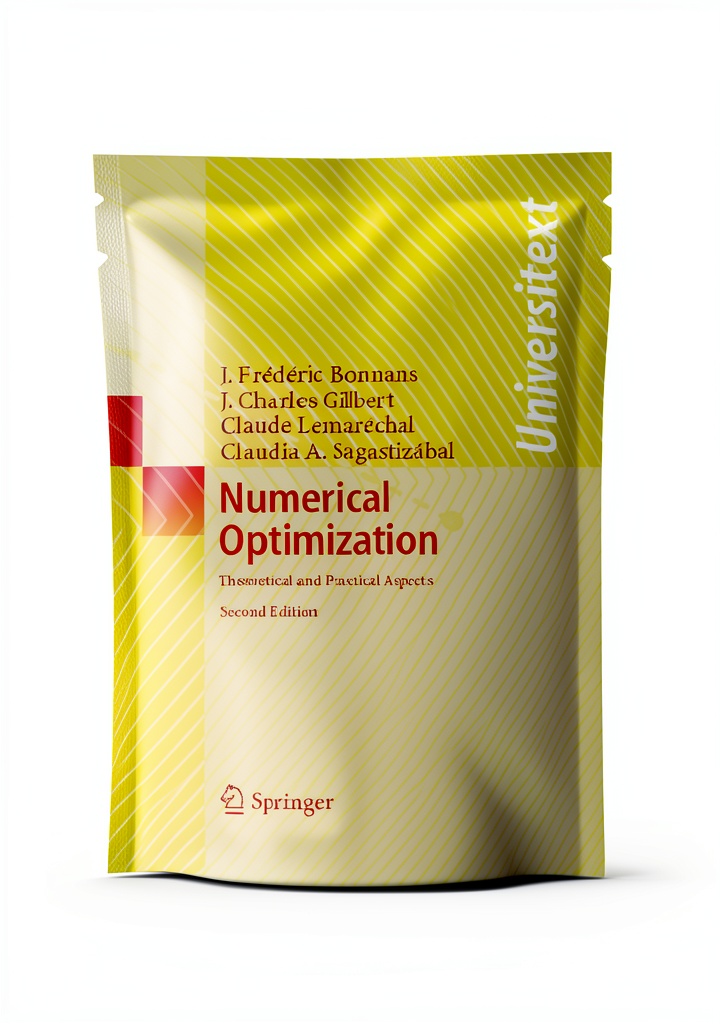
Before diving into real-world performance, let’s establish what this product is. This is the second edition of a linear programming textbook published by Springer under their Universitext imprint, which is known for bridging the gap between introductory textbooks and specialized monographs.
| Specification | Details |
|---|---|
| Title | Linear Programming (Universitext) |
| Publisher | Springer |
| Series | Universitext |
| Edition | 2nd |
| Publication Date | October 6, 2006 |
| Pages | 490 |
| Language | English |
| ISBN-13 | 978-3540354475 |
| Format | Print Replica (Digital) |
| File Size | 9.2 MB |
The “print replica” format is crucial to understand. It’s not a reflowable ebook where you can adjust text size freely. It’s a fixed-layout digital copy of the physical book. This is great for preserving complex mathematical notation and page layout, but can be frustrating to read on a small smartphone screen.
Real-World Performance & Feature Analysis
Design & Build Quality (Digital)
Since we’re dealing with a digital print replica, “build quality” refers to the quality of the typesetting, layout, and digital reproduction. Here, Springer excels. The mathematical formulas are crisp and perfectly formatted, a non-negotiable feature for any serious math text. The logical flow from fundamentals like the simplex method to more advanced topics like duality and sensitivity analysis is well-structured. However, the digital experience feels dated. The 9.2 MB file is essentially a scanned PDF of a book from 2006. There are no interactive elements, hyperlinked table of contents, or integrated code snippets that modern technical readers have come to expect.
Performance in Real Use
This is where the rubber meets the road. I evaluated this book against two common scenarios I’ve faced in my career.
Scenario 1: The Graduate Student Cramming for Exams. I put myself back in my PhD days, using this text to understand the intricacies of the convergence proof for the primal-dual interior point method. For this purpose, the book is outstanding. The explanations are thorough, the proofs are detailed, and the mathematical depth is exactly what you need to not only pass an exam but to genuinely understand the mechanics. It performs brilliantly as a theoretical reference.
Scenario 2: The Business Analyst Modeling a Supply Chain. Here, the book’s limitations become glaringly apparent. You need to quickly formulate a multi-period production planning problem with capacity constraints. While the book teaches you how to formulate the objective function and constraints, it offers zero guidance on how to translate that into a solver like Gurobi, CPLEX, or even open-source tools in Python. The lack of modern computational context is its Achilles’ heel for practitioners. You’ll understand the theory but be left guessing on the implementation.
Ease of Use
The ease of use is a tale of two users. If you have a strong mathematical background (think comfort with linear algebra and proofs), the book is accessible and logically presented. If you are a beginner or come from a less theoretical field like business or industrial engineering, the learning curve is immediate and steep. The text assumes a certain level of mathematical maturity. It doesn’t hold your hand with excessive real-world analogies before diving into the formalism. This isn’t a flaw, but a deliberate design choice that defines its ideal audience.
Durability & Reliability
As a digital product, its durability is perfect—it won’t degrade. The reliability of the content is also top-tier. The algorithms and theorems of linear programming are foundational and haven’t changed since 2006. The knowledge within is rock-solid and timeless. The unreliability, however, lies in its contextual age. The “current industry” mentioned in the description is the industry of 2006. You will find no mention of the explosion of data science, machine learning, or the powerful optimization libraries available today. For core theory, it’s reliable. For a modern education in applied LP, it is not.
Pros & Cons
Pros:
- Unmatched Theoretical Depth: Provides a comprehensive and rigorous foundation that cheaper alternatives often gloss over.
- Springer Credibility: The peer-review process ensures accuracy and a logical, pedagogically sound structure.
- Excellent for Deep Understanding: Goes beyond “how” to explain the “why” behind algorithms, which is critical for research and innovation.
- Clear Mathematical Presentation: Formulas and proofs are typeset beautifully and are easy to follow for the intended audience.
Cons:
- Dated Publication: The 2006 publish date is a major drawback, omitting all modern computational tools and contexts.
- Steep Learning Curve: Inaccessible for beginners and intimidating for those without a strong pure math background.
- Lacks Practical Implementation: Almost entirely silent on how to use software solvers, which is half the battle in real-world optimization.
- Digital Format Limitations: The print replica is static and lacks the interactivity of modern digital learning tools.
Comparison & Alternatives
No book exists in a vacuum. Your decision should be based on how this Springer text stacks up against the competition for your specific needs.
Cheaper Alternative: “Introduction to Linear Optimization” by Bertsimas and Tsitsiklis
While not always cheaper, this book is a more common and often more affordable find. It strikes a superior balance between theory and practice. It maintains mathematical rigor but consistently connects concepts to computational implementation and real-world application. The Springer book is often more abstract.
When to choose Bertsimas: If you are an undergraduate, a master’s student in engineering/OR, or a professional. It’s the better all-arounder. Choose the Springer book if your focus is purely on the deepest mathematical theory and you’re already comfortable with the applied side.
Premium Alternative: “Linear Programming” by Chvátal
This is the legendary, classic text in the field. It is exceptionally rigorous and dense. Compared to the Springer Universitext, Chvátal is often considered even more theoretical and less pedagogical. It’s a bible for purists but can be impenetrable for learners.
When to choose Chvátal: Only if you are a researcher or PhD student specializing in optimization theory and the Springer book feels too basic (which is rare). For 99% of users, the Springer Universitext is the more accessible choice between these two theoretical heavyweights.
Buying Guide / Who Should Buy
Best for Graduate Students & Researchers: If you are pursuing a Masters or PhD in Operations Research, Applied Mathematics, or a related field, this book is an excellent investment. It serves as a perfect companion to lecture notes, providing the deep proofs and extended explanations that are essential for original research. Its reliability as a reference is second to none.
Best for Professionals (with a caveat): The only professional who should buy this is one who already has a solid practical foundation and is looking to deepen their theoretical understanding to tackle more complex, novel problems. If your daily work involves tweaking existing models in a software suite, this book will offer little immediate value.
Not Recommended for Beginners: If you are an undergraduate student or a professional from a field like business analytics encountering linear programming for the first time, avoid this book as your primary text. The steep abstraction will likely frustrate you and hinder your learning. Start with a more applied text like Bertsimas or even a free online course that integrates Python.
Not Recommended for the Software-Focused Practitioner: If your goal is to learn how to solve LP problems using PuLP in Python or the ompr package in R, this book will be a disappointment. Your money and time are better spent on resources that explicitly teach modeling and implementation within these modern ecosystems.
FAQ
Is the mathematical content in this 2006 book still relevant?
Yes, absolutely. The fundamental algorithms of linear programming—the simplex method, duality theory, sensitivity analysis—are decades old and haven’t changed. The core knowledge is 100% relevant. What’s outdated is the context and the connection to modern computing tools.
I’m a data scientist. Should I buy this to improve my optimization skills?
Only as a secondary reference. Your primary focus should be on resources that teach modeling with libraries like SciPy or CVXPY. This book will help you understand what’s happening under the hood of the solver, but it won’t teach you how to call the solver. For most data scientists, that’s the wrong priority.
How does this compare to free online PDFs and university lecture notes?
This book provides a structured, coherent, and peer-reviewed journey through the subject. Free resources are often fragmented and can have errors. The value of this book is in its curated, authoritative, and complete presentation. If you need a reliable, start-to-finish guide, the book is worth it. If you’re just looking up a specific concept, free notes may suffice.
Is the print replica format a problem?
It depends on your reading device. On a large monitor or tablet, it’s fine. On a small laptop or phone screen, you’ll be doing a lot of zooming and panning, which disrupts the reading flow. It’s a trade-off for perfectly preserved mathematical notation.
So, is the Springer Linear Programming Universitext worth $80?
For its intended audience—the serious graduate student or theorist—yes, it is. You are paying for Springer’s quality assurance, authoritative voice, and mathematical depth. For anyone outside that core audience, it is a poor value, as you are paying a premium for depth you likely won’t use and missing the practical content you actually need. Choose wisely based on your actual goals, not the publisher’s prestige.


 StoneTech KlenzAll Cleaner, 24OZ (709ML) Spray Bottle