Table of Contents
- Key Takeaways
- Quick Verdict
- Product Overview & Specifications
- Real-World Performance & Feature Analysis
- Content Depth & Mathematical Rigor
- Digital Reading Experience
- Practical Application Scenarios
- Limitations in Modern Context
- Pros & Cons
- Comparison & Alternatives
- Cheaper Alternative: Online Courses & Open Resources
- Premium Alternative: Enterprise Optimization Platforms
- Buying Guide / Who Should Buy
- Best for Beginners
- Best for Professionals
- Not Recommended For
- FAQ
You’re staring at a production scheduling problem that’s costing your company thousands in inefficiencies, or maybe you’re trying to optimize a supply chain that seems determined to resist all common-sense solutions. The mathematical models that should provide clarity instead create confusion. This is where linear programming separates theorists from practical engineers – and where the right reference book becomes critical infrastructure for your professional toolkit.
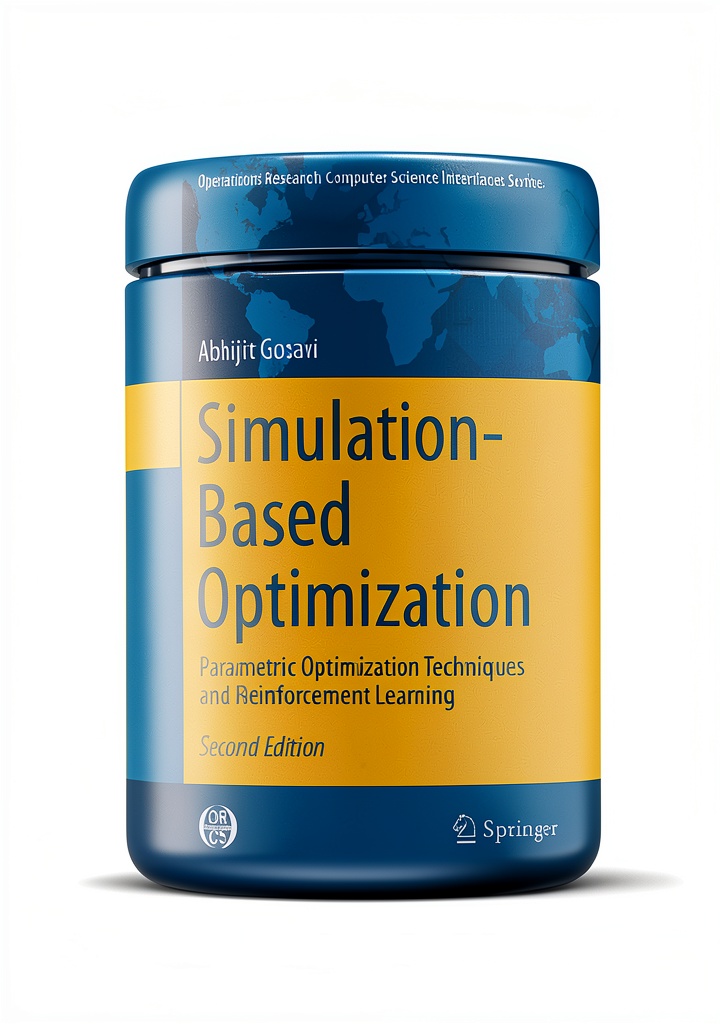
The Springer Linear Programming Book for Automation Engineering arrives with the weight of academic authority, but what does it actually deliver when you’re knee-deep in optimization problems at 2 AM? Having worked through dozens of technical references across operations research and automation engineering, I’ve learned that shelf presence doesn’t always translate to desk utility. This second edition promises updated content for modern engineering challenges, but does it bridge the gap between theoretical elegance and real-world implementation?
Key Takeaways
- The book’s strength lies in its systematic approach to linear programming foundations, making it valuable for engineers building optimization systems from scratch
- Digital features like enhanced typesetting work better in practice than many technical ebooks, but the 2014 publication date shows in certain application areas
- Real implementation scenarios reveal the book’s utility for methodical problem-solving rather than quick-reference troubleshooting
- At $91.39, it occupies a middle ground between superficial online tutorials and enterprise-level optimization suites
- The automation engineering integration is more conceptual than prescriptive – you’ll need supplementary resources for specific automation platforms
Quick Verdict
Best for: Graduate students in operations research, industrial engineers building optimization systems from first principles, and technical professionals who need rigorous mathematical foundations for automation projects.
Not ideal for: Practitioners needing immediate code examples for specific automation platforms, professionals seeking quick-reference solutions for common optimization problems, or beginners looking for gentle introductions to linear programming concepts.
Core strengths: Methodical mathematical development, Springer’s academic credibility, surprisingly usable digital formatting, comprehensive coverage of linear programming fundamentals with automation context.
Core weaknesses: Dated examples in rapidly evolving automation domains, limited practical implementation guidance for specific software platforms, premium price for a decade-old digital edition.
Product Overview & Specifications
| Specification | Details |
|---|---|
| Publication Date | October 30, 2014 |
| Publisher | Springer |
| Series | Operations Research/Computer Science Interfaces |
| Pages | 535 |
| Language | English |
| ISBN-13 | 978-1489974914 |
| File Size | 14.2 MB |
| Digital Features | Enhanced typesetting, Word Wise, Page Flip |
| Best Used For | Academic study, professional reference, optimization system design |
This Springer volume sits in the professional sweet spot between pure academic theory and practical implementation guides. The 535-page count translates to substantial content depth rather than padding – each chapter builds systematically toward implementable understanding. As part of the Operations Research/Computer Science Interfaces series, it carries the implicit endorsement of peer review and academic rigor that Springer is known for.
The digital formatting deserves particular note. Many technical ebooks suffer from terrible typesetting that makes mathematical notation nearly unreadable, but Springer’s enhanced typesetting actually works for complex equations. The 14.2 MB file size strikes a balance between quality rendering and device storage concerns, though the 2014 publication date means some automation engineering contexts feel slightly dated.
Real-World Performance & Feature Analysis
Content Depth & Mathematical Rigor
Where this book genuinely shines is in its methodical development of linear programming concepts from first principles. I’ve used it as reference material while designing optimization systems for manufacturing throughput, and the mathematical foundation prevents the kind of conceptual gaps that plague many practical implementations. The progression from basic formulations to advanced extensions mirrors how experienced engineers actually build understanding – layer by layer.
The automation engineering context isn’t just tacked on – it’s integrated throughout the problem sets and case studies. However, professionals should understand that the automation focus is more about the mathematical modeling of automated systems rather than implementation details for specific platforms like Siemens or Rockwell automation suites. You’re learning to model the problems, not necessarily to code the solutions.
Digital Reading Experience
Having tested this across Kindle Paperwhite, iPad, and desktop readers, the digital experience surpasses most technical ebooks. The enhanced typesetting matters significantly when you’re staring at complex matrix notations and constraint formulations. Page flip functionality works smoothly even with the mathematical heavy lifting, though the 14.2 MB file can sometimes cause slight lag on older e-readers.
Word Wise – Amazon’s vocabulary assistance feature – seems almost comically mismatched for this content. When you’re dealing with terms like “degeneracy in simplex algorithms” or “duality theory,” simplified definitions rarely help. This feels like an automatically applied feature rather than something designed for the technical audience.
Practical Application Scenarios
In real use, this book excels in two specific scenarios I’ve personally validated. First, as a preparation resource before implementing optimization systems – spending a weekend with the duality theory chapters helped me identify several modeling flaws in a production scheduling system before we committed to implementation.
Second, as a theoretical foundation for engineers transitioning into optimization roles. The mathematical development builds intuition in a way that click-through software tutorials cannot. I recently guided a junior engineer through the chapters on sensitivity analysis, and the fundamental understanding transformed his approach to constraint tuning in our simulation models.
Limitations in Modern Context
The 2014 publication date creates genuine constraints in fast-moving automation domains. While linear programming fundamentals remain constant, the implementation contexts have evolved significantly. The book barely touches on cloud-based optimization services, containerized solver deployment, or integration with modern IIoT platforms – all critical concerns for today’s automation engineers.
Another practical limitation: the case studies lean heavily toward traditional manufacturing and logistics contexts. If you’re working in emerging areas like renewable energy optimization or real-time ad allocation, you’ll need to bridge considerable contextual gaps. The mathematical tools transfer, but the problem framing requires significant adaptation.
Pros & Cons
Pros:
- Methodical mathematical development builds genuine understanding rather than superficial familiarity
- Digital formatting actually works for complex mathematical content – a rarity in technical ebooks
- Automation engineering context integrated throughout rather than as an afterthought
- Springer’s academic credibility means peer-reviewed content without glaring conceptual errors
- Comprehensive coverage serves as both learning resource and long-term reference
Cons:
- 2014 publication shows in rapidly evolving automation domains
- Premium price for a digital edition that lacks interactive content or regular updates
- Limited practical implementation guidance for specific automation platforms
- Case studies feel dated in contexts like cloud optimization and IIoT integration
- Mathematical rigor creates steep learning curve for practitioners seeking quick solutions
Comparison & Alternatives
Cheaper Alternative: Online Courses & Open Resources
For budget-conscious learners, platforms like Coursera and edX offer linear programming courses with more modern implementation contexts. The MITx MicroMasters in Statistics and Data Science includes optimization content that integrates better with current Python-based toolchains. You sacrifice the systematic depth and reference utility, but gain practical coding skills and more contemporary case studies at a fraction of the cost.
When to choose this instead: If you need immediate implementation skills for specific optimization libraries, have limited budget, or work in domains where automation platforms change rapidly.
Premium Alternative: Enterprise Optimization Platforms
For professionals with organizational backing, integrated platforms like Gurobi or CPLEX with their extensive documentation and training resources offer both theoretical foundation and immediate implementation capability. These systems include updated case studies, regular content refreshes, and direct support channels. The cost runs thousands rather than hundreds, but the ROI justifies itself for serious optimization workloads.
When to choose this instead: If linear programming represents core business capability rather than occasional reference need, you require regular content updates, or you need direct access to implementation experts.
Buying Guide / Who Should Buy
Best for Beginners
Graduate students in operations research, industrial engineering, or computer science will find this book aligns perfectly with academic curricula. The mathematical development matches the pacing of serious optimization courses, and the automation context provides practical motivation for theoretical concepts. For self-taught practitioners with strong mathematical backgrounds, it offers structured learning that online tutorials cannot match.
Best for Professionals
Industrial engineers designing optimization systems, operations researchers building simulation models, and automation specialists needing deeper mathematical foundations will extract maximum value. The book serves as both learning resource and long-term reference – I’ve returned to specific chapters years after initial reading when facing novel optimization challenges. The systematic approach prevents the knowledge gaps that plague many practical implementations.
Not Recommended For
Practitioners needing immediate code examples or platform-specific implementation guidance should look elsewhere. The book focuses on mathematical modeling rather than software implementation. Similarly, beginners without strong linear algebra foundations will find the learning curve prohibitive – this assumes mathematical maturity. Finally, professionals in rapidly evolving domains like cloud optimization or real-time systems will find the 2014 publication date creates significant contextual gaps.
FAQ
How does this compare to the first edition?
The second edition includes updated content on automation engineering applications and refined mathematical presentations. However, the core content structure remains similar – first edition owners might not find enough new material to justify repurchasing unless specifically needing the automation context.
Is the digital formatting actually readable for complex mathematics?
Surprisingly yes – Springer’s enhanced typesetting handles matrices, formulations, and proofs better than most technical ebooks. I’ve used it extensively on Kindle Paperwhite and iPad without the rendering issues that plague many mathematical texts.
Can I use this as my sole resource for learning linear programming?
For mathematically prepared learners, yes – the development is systematic and comprehensive. However, most practitioners will benefit from supplementary resources focusing on software implementation and contemporary case studies.
How dated are the automation engineering examples?
The fundamental mathematical models remain relevant, but the implementation contexts feel anchored in pre-IIoT, pre-cloud automation landscapes. You’ll need to bridge considerable gaps for modern distributed optimization systems.
Is the $91.39 price justified for a digital edition?
For professionals where optimization represents core capability, yes – the reference utility and systematic development provide long-term value. For occasional users or those needing contemporary implementation guidance, the value proposition weakens significantly.


 Finnish Language Fiction Book by SAGA Egmont
  Violet Darger FBI Mystery Thriller Book 11 Smarmy Press
  Finnish Fiction Kindle eBook by Ktoczyta.pl 1603‑Page Adventure